

Men’s Emotional Wellness: A Practical Toolkit for Everyday Life
When men think about wellness, they often think about the gym, sleep, or diet. Those matter. But there's another side of men's wellness that rarely gets talked about: how you handle stress, emotions, guilt, and relationships.
That's men's emotional wellness, and it affects everything from your marriage to your work to how you feel when you wake up in the morning. The problem is that most men were never given the tools to take care of it.
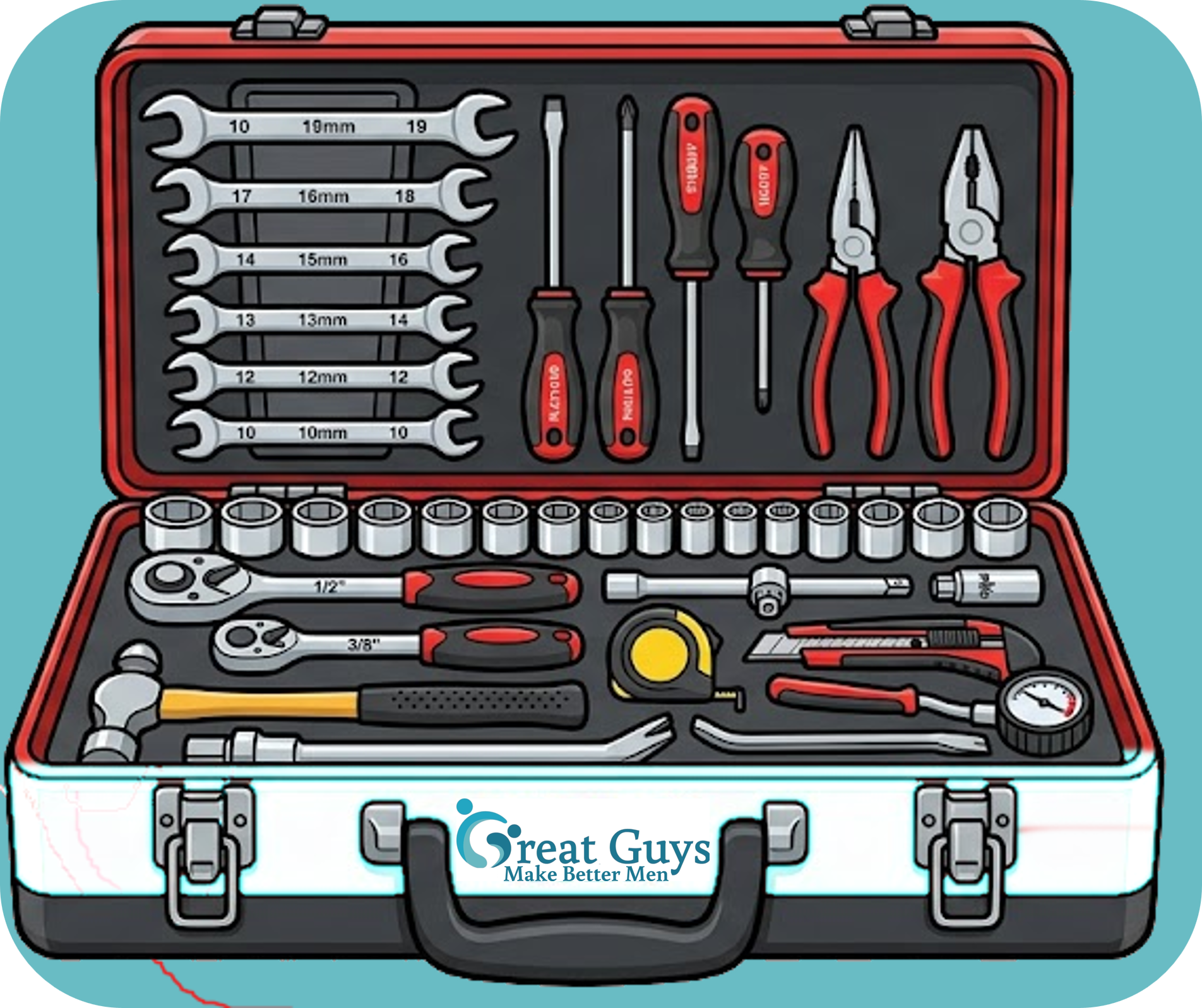
In this guide, you'll learn what emotional wellness means for men, why it matters, signs of emotional maturity, and a practical men's wellness toolkit built on the 12 tools of the Great Guys Tool Chest.
What Is Men's Emotional Wellness?
Men's emotional wellness is the ability to understand your emotions, handle stress in healthy ways, maintain strong relationships, and feel good about the man you are. It isn't about never feeling down. It's about having the tools to recover, reconnect, and keep moving forward.
Emotional wellness works alongside physical and mental well-being. When one is off, the others usually feel it too.
Why Men's Emotional Wellness Matters
Many men carry stress quietly. Common challenges include:
Being taught to "tough it out." Many men learned to keep feelings to themselves.
Isolation. As life gets busy, friendships often fade, leaving fewer people to talk to.
Unhealthy coping. Stress can turn into anger, drinking, overworking, or shutting down. Explore healthier coping strategies.
Carrying guilt and regret. Old mistakes can quietly drain energy and self-worth.
Taking care of your emotional wellness isn't weakness. It's how you stay strong for yourself and the people who count on you.
The Men's Wellness Toolkit: 8 Habits for Emotional Well-Being
Each habit below connects to one of the Great Guys 12 tools for men. Choose the one that speaks to your life today.
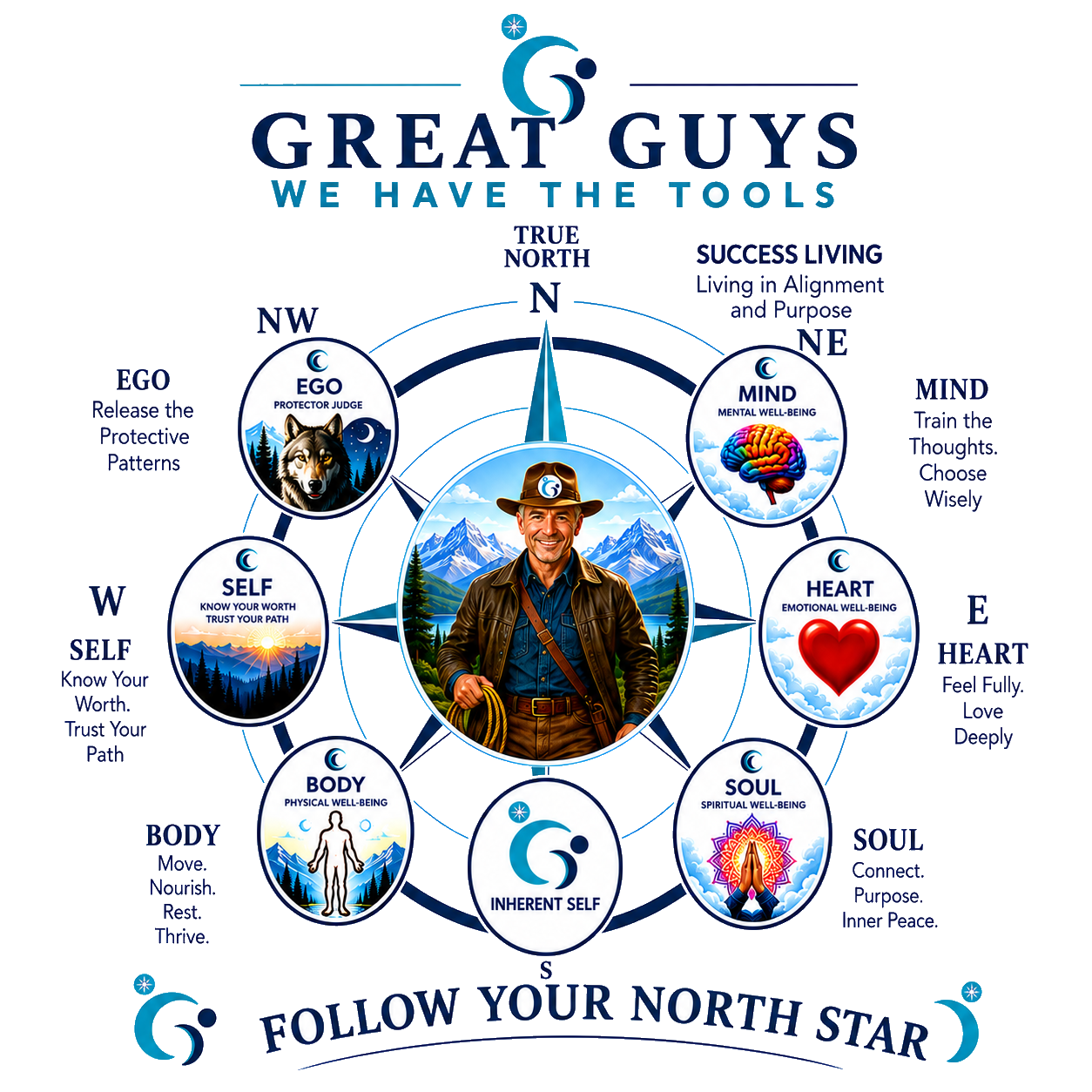
1. Check Your Compass
Life gets busy, and it's surprisingly easy to drift without realizing it. The Compass tool helps you find your True North, notice which part of your life is off course, and choose your way back.
2. Understand Your Past
Some of today's reactions started a long time ago. The ACE Test helps you explore childhood experiences that may still influence you, without letting your past define your future.
3. Catch Your Reactions Early
The 5 Saboteurs tool helps you spot automatic reactions before they take the wheel. Read our full guide on how to stop self-sabotaging.
4. Change the Story in Your Head
The story you tell yourself drives how you feel. The Reframe tool helps you see another possibility and choose a different response. It's a key skill in emotional intelligence for men.
5. Stop Proving, Start Living
Achievement and approval don't always quiet the feeling that you should be more. The Enough tool helps you spend less energy proving your worth and more energy living your life.
6. Release Guilt and Shame
How long should one mistake get to collect interest? The Self-Forgiven tool helps you release guilt, restore self-respect, and make amends where you can. Learn more about being forgiven.
7. Stay Connected
Strong relationships are one of the best protectors of emotional well-being. The 5 A's (Attention, Acceptance, Appreciation, Affection, and Allowing) help you build closer connections. See our guide on how to be a better partner.
8. Help Good Happen
Knowing better isn't the finish line. Living differently is. The Good Happens tool helps you turn gratitude into good actions and make a positive difference for yourself and others. Discover how good happens.
Signs of Emotional Maturity in Men
How do you know your emotional wellness is growing? Look for these signs:
You can name your feelings instead of just reacting to them.
You pause before responding when you're upset.
You take responsibility for your mistakes and make amends.
You can ask for help without feeling weak.
You listen to understand, not just to reply.
You treat yourself with the same patience you'd give a friend.
We call this "Living in My Adult": meeting life with awareness and choosing how you respond. It's at the heart of becoming a better man.
Understand It. Use It. Live It.
Understand It
Ask yourself: "What could be better in my emotional life right now?" Stress, relationships, guilt, or self-worth? That answer points to your first tool.
Use It
Choose one habit from the toolkit and practice it every day for a week. Keep it small and specific.
Live It
When that habit feels natural, add another. Emotional wellness is built one practice at a time.
A Real-Life Example
At 52, Rob had a good job and a family he loved, but he felt flat and irritable most days. Using the Compass tool, he realized he had drifted away from friendships and anything that wasn't work. He started a weekly walk with an old friend and began practicing Self-Forgiven for mistakes he'd been carrying for years. A few months later, his wife said, "It's good to have you back."
Men's emotional wellness isn't a destination. It's a toolkit you keep using.
Frequently Asked Questions
What is emotional wellness for men?
It's the ability to understand and manage emotions, handle stress in healthy ways, build strong relationships, and feel good about who you are.
How can men improve emotional well-being?
Start small: name your feelings, stay connected with friends, release old guilt, and use practical tools to manage reactions. Consistent small habits make the biggest difference.
How do I become emotionally mature?
Practice pausing before reacting, take responsibility for your actions, listen with empathy, and keep learning about your own patterns. Emotional maturity grows with practice, not age.
When should a man seek professional help?
If stress, sadness, anger, or anxiety are affecting your daily life, relationships, or work, it's a strong sign to talk to a doctor or mental health professional. Asking for help is a sign of strength.
Your Next Step
Your emotional wellness deserves the same attention as your physical health. Start with one tool today.
Explore the full Great Guys Tool Chest, learn from our mentors, or join Great Guys to get practical tools delivered to your inbox. Let's tool up and help good happen.
Note: Great Guys offers personal growth tools and is not a substitute for professional advice. If you're struggling with your mental health, please reach out to a qualified professional. In the U.S., you can call or text 988 to reach the Suicide & Crisis Lifeline anytime.
