

How to Stop Self-Sabotaging: The 5 Saboteurs Holding Men Back
You know what you want: a better relationship, a healthier routine, a new opportunity. Then, right when things start going well, you pick a fight, put it off, or quit. Afterward you ask yourself, "Why do I keep doing this?"
That pattern has a name: self-sabotage. And if you want to know how to stop self-sabotaging, the first step isn't more willpower. It's understanding the automatic reactions that keep grabbing the wheel.
In this guide, you'll learn what self-sabotage is, why it happens, the most common signs, and how to stop it using the 5 Saboteurs tool from the Great Guys Tool Chest.

What Is Self-Sabotage?
Self-sabotage is when your own thoughts or actions get in the way of what you really want. It's usually not a conscious choice. It's an old, automatic reaction that once helped you feel safe, but now holds you back from the life and relationships you want.
At Great Guys, we see self-sabotage as a reaction taking over before your better judgment can step in. Learn more on our Sabotage page.
Why Do I Self-Sabotage?
If you've ever asked "why do I self-sabotage?", you're not alone. Common reasons include:
Survival wiring. An old automatic reaction is almost always faster than your better judgment. Your brain is built to protect you first.
Childhood patterns. What happened growing up can shape how you react to stress, success, and closeness. The ACE Test can help you see where some patterns started.
False beliefs. Deep down, you may believe you don't deserve good things. Explore how false beliefs drive behavior.
Never feeling "enough." When you feel you have to keep proving yourself, it's easy to give up before you can "fail."
Signs of Self-Sabotaging Behavior
Self-sabotaging behavior can look different for every man. Watch for these signs:
Procrastinating on things that matter most to you
Picking fights when a relationship is going well
Quitting just before you reach a goal
Perfectionism that stops you from starting
Numbing out with alcohol, screens, or work instead of facing problems (see healthy coping)
Saying yes to everyone and then resenting it
A harsh inner voice that says "why bother?"
How to Stop Self-Sabotaging: Meet the 5 Saboteurs
The Great Guys 5 Saboteurs tool helps you spot the reaction before it takes over. Most self-sabotage comes from one of five familiar characters. Which one grabs your wheel?
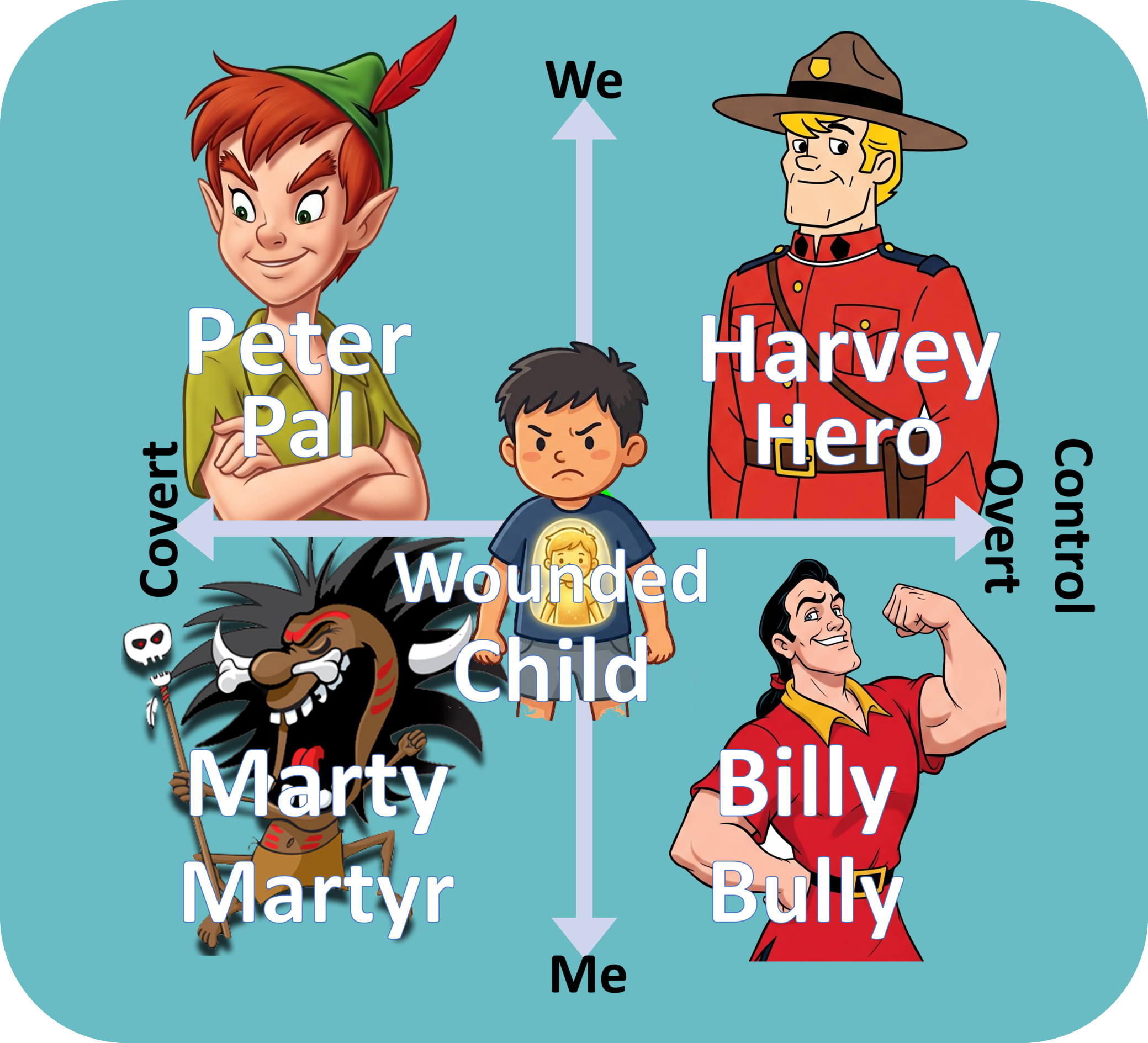
1. The Bully
The Bully pushes, controls, and intimidates, sometimes others and often yourself. It shows up as anger, harsh criticism, or needing to win every argument.
2. The Hero
The Hero tries to fix everything and everyone, and never asks for help. It looks noble, but it often leads to burnout and keeps others at arm's length.
3. The Martyr
The Martyr gives and gives, then quietly keeps score. It sacrifices its own needs and ends up feeling unappreciated and resentful.
4. The Wounded Child
The Wounded Child reacts from old hurt. When something feels like rejection or criticism, it shuts down, sulks, or feels powerless, just like it did years ago.
5. The Peter Pal
Like Peter Pan, the Peter Pal avoids responsibility and growing up. It looks for fun and escape when life asks for commitment, follow-through, or hard conversations.
6 Steps to Stop Self-Sabotage
Once you know your saboteurs, use these steps to take back the wheel:
Notice the trigger. What situation sets off your old reaction?
Name the saboteur. Ask, "Who grabbed the wheel: Bully, Hero, Martyr, Wounded Child, or Peter Pal?"
Pause. Take a breath before acting. Even a few seconds gives your better judgment a chance.
Ask what your Adult wants. What would the man you want to be do right now?
Reframe the story. Replace "I always mess this up" with "I'm learning a new response."
Forgive yourself when you slip. Guilt keeps the cycle going. Learn to be forgiven and try again.
Understand It. Use It. Live It.
Understand It
Look back at the last time you sabotaged something important. Which of the 5 Saboteurs was driving? What was the trigger?
Use It
This week, when you feel that familiar urge to quit, snap, or escape, say the saboteur's name to yourself. Naming it creates space to choose.
Live It
Keep catching your saboteurs early. Over time, recognizing "who grabbed the wheel" becomes automatic, and better choices follow.

A Real-Life Example
Dan had been dating someone great for six months. As things got serious, he started picking small fights and canceling plans. Using the 5 Saboteurs tool, he recognized his Wounded Child: getting close felt risky because past relationships had ended in hurt. Instead of pulling away, he told her, "I notice I'm pushing you away because this matters to me, and that scares me." The relationship got stronger, not weaker.
That's how you stop self-sabotaging: not by fighting yourself, but by understanding which reaction is driving.
Frequently Asked Questions
Why do I self-sabotage when things are going well?
Success and closeness can feel unfamiliar, and the brain often treats unfamiliar as unsafe. Old reactions step in to bring things back to what feels "normal," even when normal isn't good for you.
Is self-sabotage a mental illness?
Self-sabotage itself isn't a diagnosis. It's a pattern of behavior. However, it can be connected to anxiety, depression, or past trauma, so it's worth talking to a professional if it's affecting your life.
How do I stop self-sabotaging in relationships?
Notice when you pull away or pick fights, name the saboteur behind it, and share what's really happening with your partner. Our guide on how to be a better partner offers more practical habits.
Can self-sabotage be stopped permanently?
Old reactions may still show up, but you can get much faster at spotting them and choosing differently. With practice, self-sabotage loses its grip.
Your Next Step
You're not broken. You're running old reactions that once protected you. Recognize them, name them, and choose your response.
Explore the full Great Guys Tool Chest, learn about emotional intelligence for men, or join Great Guys to get practical tools delivered to your inbox. Let's tool up and help good happen.
Note: Great Guys offers personal growth tools and is not a substitute for professional advice. If you're struggling with your mental health, please reach out to a qualified professional.
